
The short answer
HVAC maintenance is a seasonal checkup that cleans, tests, and adjusts your heating and cooling equipment so it runs safely and efficiently. Most San Jose homes benefit from one visit per system each year, ideally in spring for cooling and fall for heating. Uneven temperatures, weak airflow, new noises, or rising bills are all signs it's time.
Regular maintenance keeps your furnace, air conditioner, or heat pump running the way it should. It also gives you a chance to catch small problems before they turn into a cold night in January or a dead AC during a September heat wave. CoolForce AC Repair services heating and cooling systems in homes across San Jose and nearby cities. The Santa Clara Valley has dry summers and mild, damp winters, and inland and southern neighborhoods run noticeably hotter in summer than areas near the Bay. Many systems here work hard through the warm months and then handle a shorter heating season. That is why a tune-up before each season makes sense for most homes.
Signs Your System Is Due for Maintenance
Many homeowners schedule maintenance once a year for each system, usually in spring for the air conditioner and fall for the furnace. If you can't remember the last visit, it's probably time. Beyond the calendar, watch for these signs:
None of these always means something is broken, but each one is worth checking. A gas smell is different. Leave the house right away and call your gas utility from outside before you call us. If you see a yellow flame or suspect a carbon monoxide problem, turn the system off and get it inspected before you run it again.
- Rooms that heat or cool unevenly, or a system that runs longer than it used to
- Weak airflow from vents, even with a clean filter
- New noises such as rattling, squealing, banging, or a loud click at startup
- Short cycling, where the system turns on and off every few minutes
- Higher energy bills without any change in how you use the system
- Dust building up quickly, musty smells, or more allergy symptoms indoors
- Water around the indoor unit or ice on the refrigerant lines
- A furnace flame that looks yellow or flickers instead of burning steady blue
What We Check During a Maintenance Visit
A maintenance visit covers the parts that wear out, clog, or drift out of adjustment over time. The exact checklist depends on your equipment, whether that's a gas furnace, a central air conditioner, a heat pump, or a combination.
When we finish, we walk you through what we found. That includes anything that's starting to wear, so you can plan ahead instead of being caught by surprise.
- Air filter condition and size, with replacement if you request it
- Thermostat settings, calibration, and wiring
- Electrical connections, capacitors, and contactors, which are common failure points
- Blower motor and wheel, cleaned and checked for wear
- Outdoor coil cleaned, fins inspected, and debris cleared from around the unit
- Indoor coil and condensate drain checked and flushed to help prevent leaks and clogs
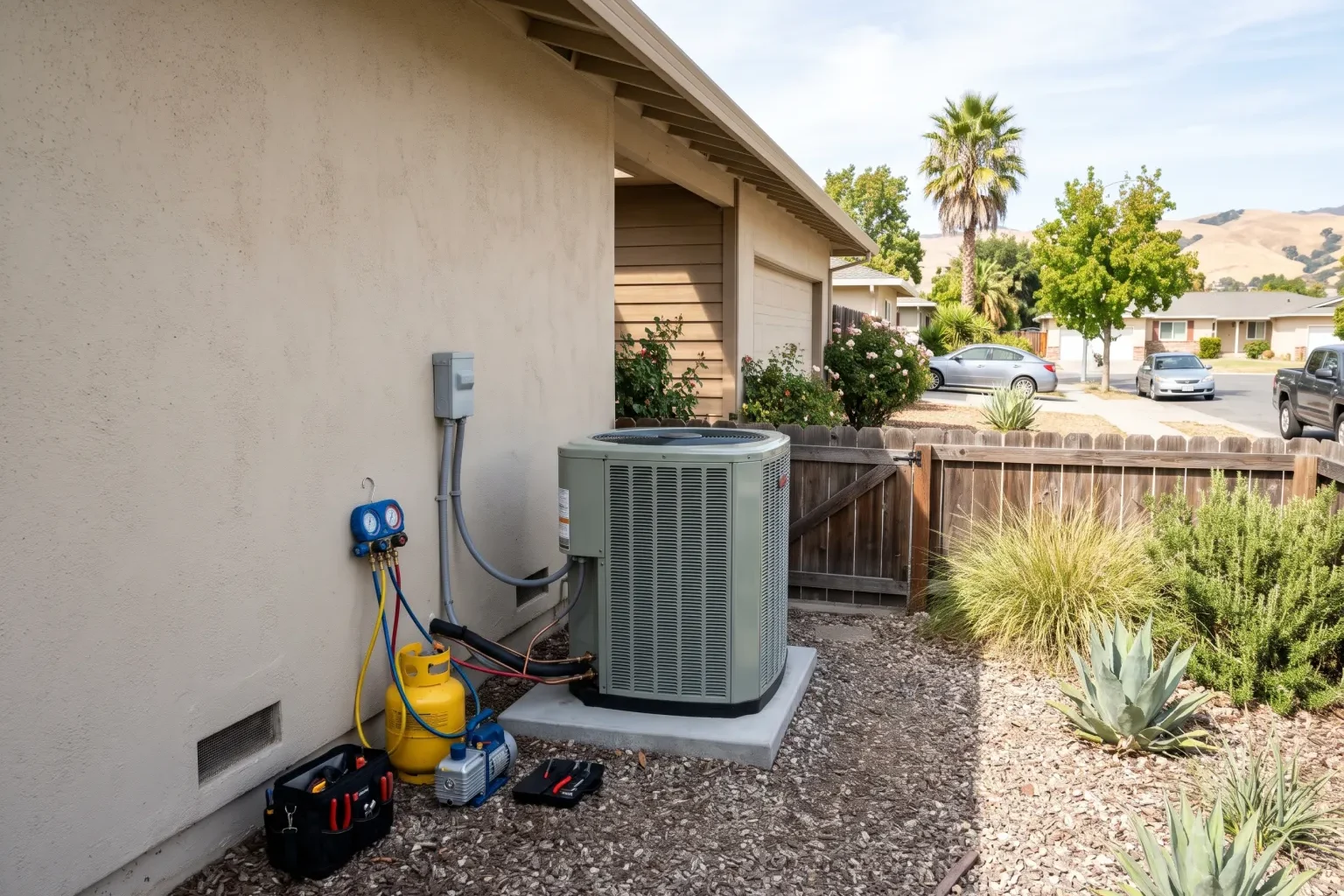
- Refrigerant pressures and temperature difference across the coil, to confirm the system is heating or cooling properly
- Furnace burners, flame sensor, igniter, and heat exchanger inspected
- Venting and flue checked for proper draft, plus a carbon monoxide reading near the equipment
- Safety controls tested, including limit switches and the condensate float switch
Repair or Replace?
Sometimes maintenance turns up a problem that needs more than a cleaning. A worn part like a capacitor, igniter, or clogged drain line is usually a straightforward repair. Bigger issues, such as a cracked heat exchanger, a failed compressor, or repeated refrigerant leaks, raise the question of whether repair still makes sense.
To help you decide, we look at the age and condition of the equipment and how often it has needed repairs. We also check whether parts are still available and how well the system has kept your home comfortable. We lay out the options and the trade-offs, and the decision is yours.
A few local rules are worth knowing. Bay Area Air District appliance rules don't require you to replace working equipment. They apply only when an existing furnace fails or is replaced. Under those rules, natural gas furnaces manufactured from 2029 must meet a zero-NOx emission standard. In practice, that points homeowners toward heat pumps when a furnace is replaced after that date. If your furnace is aging, you may want to think about a heat pump now rather than deciding during an emergency later.
On incentives, the federal Energy Efficient Home Improvement Credit covered qualifying heat pumps placed in service before December 31, 2025. It isn't available for new installations after that date. Bay Area homeowners can still check BayREN and their local clean energy provider for current heat pump and electrification incentives. Those offers change by funding cycle, so we confirm what's available before including it in any quote.
What Affects the Cost
We don't quote a single figure without knowing your setup, because several factors change how long a visit takes and what it involves:
We tell you what the visit includes up front. No additional work happens without your approval.
- Number and type of systems. A furnace and AC together take longer than one unit, and a heat pump has its own set of checks.
- Access to equipment in attics, crawlspaces, closets, or on rooftops
- How long it has been since the last service, and how dirty the coils, blower, and drain are
- Whether you need filters or other replacement parts
- Repairs found during the visit, which we explain and price before doing any work
How a Visit Works
Here's what to expect from start to finish:
Visits usually take one to two hours per system, depending on condition and access. You can help by clearing a path to the indoor unit and keeping pets in another room. Between visits, check your filter monthly and keep plants and debris a couple of feet away from the outdoor unit so it can move air freely.
- You schedule a time and tell us what equipment you have and any problems you've noticed.
- A technician arrives, asks a few questions, and looks over your thermostat and the system's history.
- We shut off power where needed and work through the indoor and outdoor checks.
- We run the system to confirm heating and cooling performance.
- We go over our findings with you, show photos if helpful, and explain any recommended repairs.
- If you approve a repair and we have the part on hand, we can often complete it during the same visit.