
The short answer
If your furnace is blowing cold air, cycling on and off, making new noises, or not starting at all, it likely needs a repair visit. Most furnace problems can be fixed, and we explain what we find and your options, including whether replacement makes more sense, before any work begins.
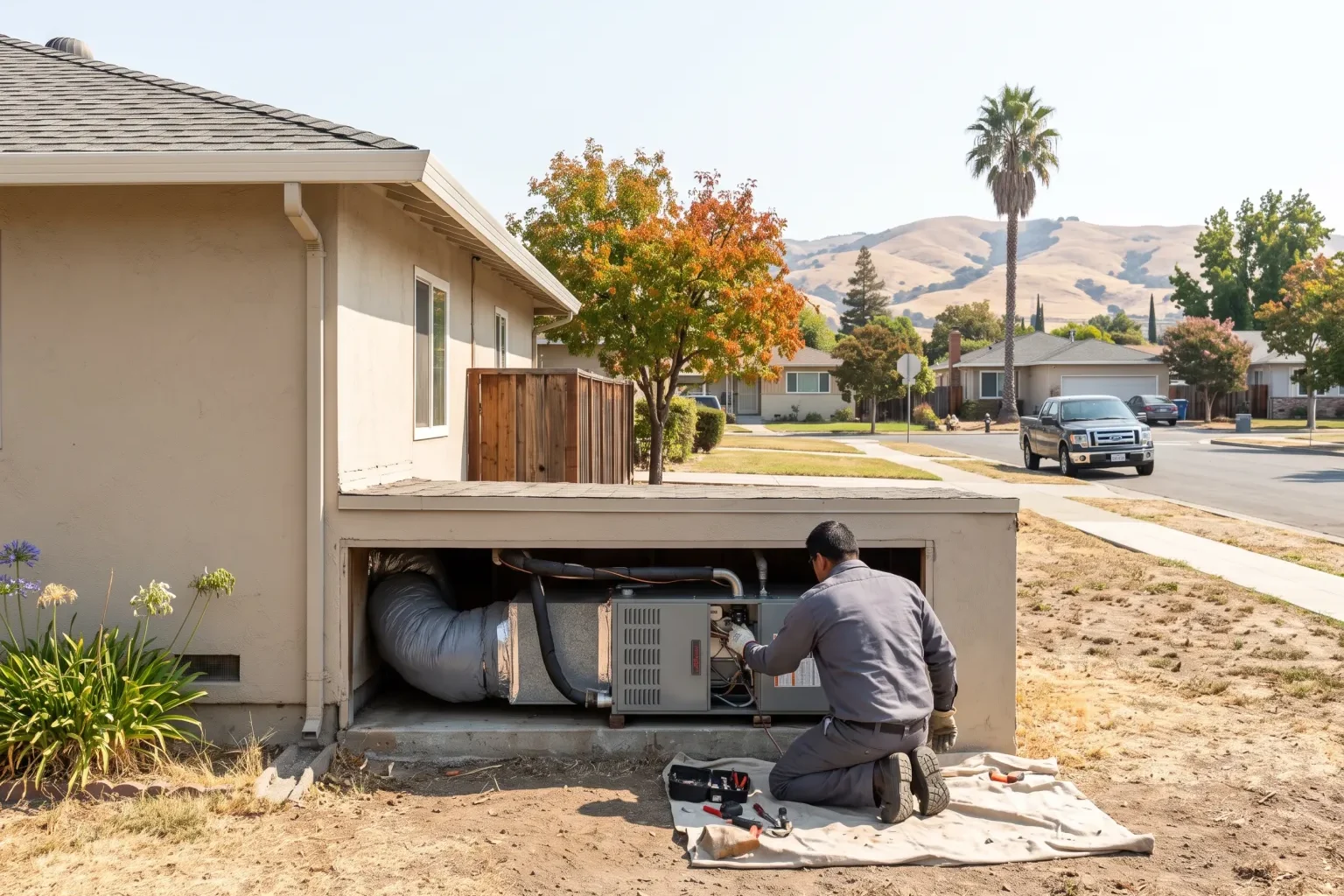
Winters in the Santa Clara Valley are mild compared with much of the country, but damp nights in December and January still get cold enough that most San Jose homes rely on a furnace. Many furnaces here sit idle for most of the year, so problems often show up on the first chilly evening of the season: a burner that won't light, air that blows cool, or a strange smell when the system kicks on. CoolForce AC Repair diagnoses and repairs gas furnaces for homeowners in San Jose and nearby South Bay cities. This page covers the warning signs, what our technicians check, how to weigh repair against replacement, what affects the cost, and what happens during a visit.
Signs Your Furnace Needs Repair
Some furnace problems are obvious. Others creep in slowly, and you only notice when your gas bill climbs or one bedroom never warms up. Schedule a repair visit if you notice any of the following:
If you smell gas, which usually has a rotten-egg odor, don't try to find the source yourself. Leave the house and call your gas utility or 911 from outside. If a carbon monoxide alarm sounds, get everyone outdoors and call 911 first.
- The furnace won't turn on, or the burners light and then shut off within a few minutes
- Air from the vents feels lukewarm or cold while the heat is running
- The system turns on and off much more often than it used to
- Banging, booming, squealing, grinding, or rattling sounds when it starts or runs
- A burning, electrical, or musty smell that lasts beyond the first few minutes of the season
- Some rooms stay noticeably colder than others
- The blower runs constantly, or never runs at all
- A yellow or flickering burner flame instead of a steady blue one
- Higher gas bills without a change in how you use your heat
What We Check During a Furnace Repair Visit
A good repair is more than replacing the part that failed. We look at the whole system so we can tell you why it failed and whether anything else is likely to follow.
When we finish the inspection, we walk you through what we found in plain language, show you the worn or failed parts when we can, and explain which issues need attention now and which can wait.
- Thermostat settings, wiring, and batteries, since a thermostat fault can look like a furnace failure
- Ignition system, including the hot surface igniter or pilot assembly
- Flame sensor, which commonly gets dirty and causes the furnace to shut off shortly after lighting
- Burners and flame quality
- Heat exchanger condition, looking for cracks or corrosion
- Blower motor, capacitor, and belt (on older units)
- Limit switches, pressure switches, and other safety controls
- Inducer motor and venting, to make sure exhaust leaves the home properly
- Air filter and airflow, since a clogged filter is behind many overheating shutdowns
- Electrical connections and the control board
- Condensate drain lines on high-efficiency furnaces
Repair or Replace: How to Decide
Most furnace problems are repairable, and a working furnace that just needs a new igniter, sensor, or motor usually doesn't need to be replaced. We start by assuming a repair, then tell you honestly if the numbers or the condition of the unit point another way.
Replacement is worth discussing when the furnace is near the end of its expected life, when you've needed several repairs in a short time, when the heat exchanger is cracked, or when the system has never kept your home comfortable. Comfort and efficiency matter too: an older, lower-efficiency furnace may cost more to run each winter than a newer system.
Local rules are part of the picture, but they don't force anything right now. The Bay Area Air District's appliance rules don't require you to replace working equipment; they only apply when a furnace fails or is replaced. Under Rule 9-4, natural gas furnaces manufactured from 2029 must meet a zero-NOx emission standard, which in practice points homeowners toward heat pumps for replacements after that date. If your furnace is aging, that's useful to know as you plan.
A heat pump handles both heating and cooling, which suits the South Bay's mild, damp winters and dry summers, especially in inland and southern parts of the valley that run hotter. On incentives, the federal 25C tax credit for heat pumps applied only to systems placed in service before December 31, 2025, so it isn't available for new installations. Bay Area homeowners can still check BayREN and their local clean energy provider for current electrification incentives. Those offers change by funding cycle, so we confirm what's available before including it in any quote.
What Affects the Cost of a Furnace Repair
We give you a clear quote after diagnosing the problem and before starting any repair. The total depends on several factors:
- The part that failed: a flame sensor cleaning is a much smaller job than replacing a blower motor or control board
- Furnace type, brand, and age, which affect part availability and whether a part is specific to that model
- Where the furnace is installed: attics, crawlspaces, and tight closets take more time to work in
- Whether multiple issues are found, such as a failed igniter plus a weak capacitor
- Venting or ductwork problems that contribute to the failure
- Timing, since urgent visits during cold snaps can affect scheduling
How a Furnace Repair Visit Works
We keep the process simple so you know what's happening at each step:
Before we arrive, it helps to check that the thermostat is set to heat, the furnace power switch is on, the breaker hasn't tripped, and the filter isn't clogged. Sometimes one of those fixes the problem.
- You contact us and describe what the furnace is doing, and we schedule a visit
- A technician arrives, asks a few questions, and inspects the system
- We explain the cause, your options, and the quote for each
- You decide how to proceed; no work starts without your approval
- We complete the repair, test the furnace through full heating cycles, and confirm it's running safely
- We let you know about anything to watch for or plan for down the road
Furnace Repair by city
- Furnace Repair in Campbell
- Furnace Repair in Los Gatos
- Furnace Repair in Monte Sereno
- Furnace Repair in Saratoga
- Furnace Repair in Santa Clara
- Furnace Repair in Cupertino
- Furnace Repair in Sunnyvale
- Furnace Repair in Milpitas
- Furnace Repair in Los Altos
- Furnace Repair in Mountain View
- Furnace Repair in Los Altos Hills
- Furnace Repair in Scotts Valley