
The short answer
Duct cleaning makes sense when something has actually gotten into your ducts, like construction dust, pest debris, or moisture, or when dust keeps blowing from your vents. It is not a routine yearly chore for most homes. We inspect first, show you what's inside, and recommend cleaning, sealing, repair, or replacement based on what we find.
Your ductwork moves all the heated and cooled air through your home, but most of it sits out of sight in attics, crawlspaces, and wall cavities. Over time, ducts collect dust and debris, and sometimes pests or moisture get in. Joints can also loosen or tear. CoolForce AC Repair cleans and inspects duct systems for homeowners in San Jose and nearby cities such as Santa Clara, Campbell, Milpitas, and Sunnyvale. Not every home needs duct cleaning, and we will tell you if yours doesn't. This page covers the signs worth watching for, what we look at, and how we decide whether cleaning, repair, or replacement makes sense.
Signs Your Ducts Need Cleaning
Most homes don't need duct cleaning on a fixed schedule. It makes sense when something has gotten into the system or when the ducts are hurting comfort or air quality. In the Santa Clara Valley, dry summers bring a lot of fine dust. The hotter inland and southern parts of the valley also run air conditioning hard for months, which pulls more air and more debris through the system. Mild, damp winters can lead to condensation problems in attics and crawlspaces.
If you suspect mold, have it identified before cleaning. Cleaning alone won't fix the moisture problem that caused it.
- Dust blowing out of supply registers when the system starts, or buildup on register grilles soon after you clean them
- Recent remodeling, drywall work, or sanding done without sealing off the vents
- Signs of rodents or insects, such as droppings, nesting material, or odors near vents
- Musty smells when the heat or AC runs, which can point to moisture or mold in the ducts
- Rooms that stay noticeably warmer or cooler than the rest of the house
- Air filters that clog much faster than they used to
- A newly purchased home where you don't know when the ducts were last serviced
What We Check During a Duct Inspection
Before we recommend anything, we inspect the system so you can see what's actually inside your ducts. Where access allows, we use a camera to show you the inside of supply and return runs.
Afterward, we walk you through what we found. We point out which issues affect air quality and which affect comfort and energy use.
- Inside condition of supply and return ducts: dust depth, debris, pest activity, and any moisture or staining
- Joints, seams, and connections at the air handler, plenums, and registers
- Flexible duct for crushing, kinks, sagging, or tears
- Insulation on ducts that run through the attic or crawlspace
- Return air pathways and whether the system gets enough return air
- Filter size, fit, and location, including gaps that let air bypass the filter
- Blower and evaporator coil condition, since a dirty coil or blower can push dust back into clean ducts
Clean, Repair, or Replace: Your Options
Cleaning deals with what's inside the ducts. It won't fix leaks, crushed sections, or missing insulation, and those problems often matter more for comfort and energy use. Based on the inspection, we lay out the options that fit your system.
If you're planning to replace a furnace or switch to a heat pump, look at the ducts at the same time. Under Bay Area Air District rules, gas furnaces manufactured from 2029 must meet a zero-NOx emission standard, which in practice points many homeowners toward heat pumps when a furnace is replaced. The rules don't require replacing working equipment. But if a change is coming, sizing and sealing the ducts along with the new system means you only do the work once.
- Cleaning only: the ducts are in good shape but contain debris, construction dust, or pest contamination.
- Sealing and repair: we reseal leaky joints with mastic or approved tape, reconnect separated runs, re-hang sagging flex duct, and replace short damaged sections.
- Insulation repair: we replace torn or missing duct insulation in attics and crawlspaces, where summer heat can warm the air before it reaches your rooms.
- Partial replacement: we replace runs that are crushed, badly torn, or heavily contaminated and keep the rest of the system.
- Full replacement: often the better choice when ducts are old, poorly laid out, damaged throughout, or too small for the equipment.
What Affects the Cost of Duct Cleaning
Duct work varies a lot from house to house, so we give you a written quote after the inspection, not before. The main factors are listed below.
We separate required work from optional work so you can decide what to do now and what can wait.
- Size of the home and the number of supply and return vents
- How the ducts are reached: an open attic is simpler than a tight crawlspace or ducts inside walls and ceilings
- Type of duct, since rigid metal, duct board, and flexible duct each clean and repair differently
- How dirty the ducts are, including pest debris or construction dust
- Whether the blower, coil, or registers also need cleaning
- How much sealing, insulation, or replacement is needed
- Multiple systems or zones in the same home
How a Duct Cleaning Visit Works
We start by asking what prompted the call, such as dust, smells, uneven room temperatures, or a recent project. Then we inspect the system and show you what we found. If you approve the work, we cover floors and furniture near vents and work areas.
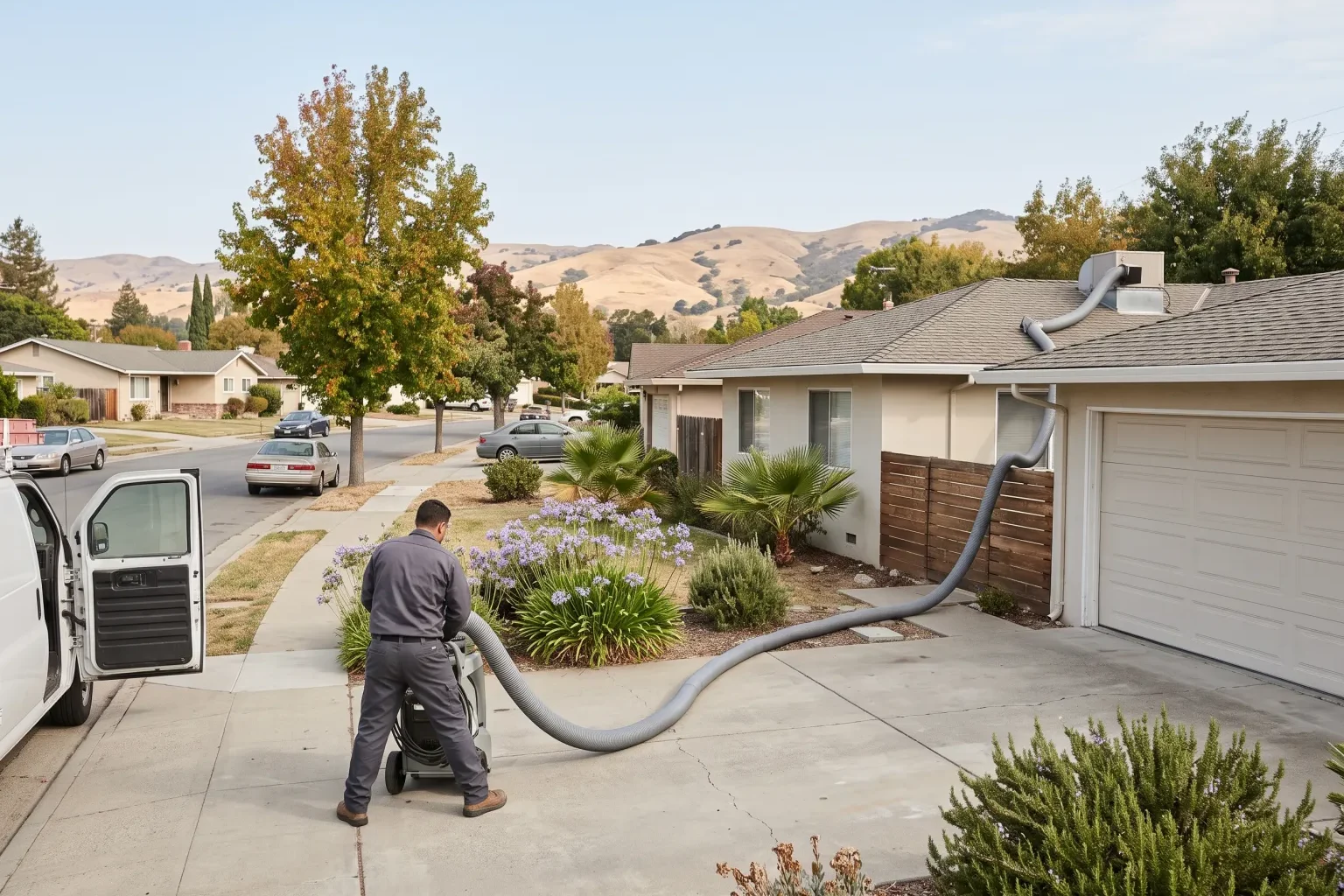
For cleaning, we connect a powerful vacuum to the duct system to keep it under negative pressure. Then we loosen debris in each run with brushes and air tools so it gets pulled out instead of blown into your living space. We clean registers and grilles, plus the blower and coil if that's part of the job. Any sealing or repairs come next.
Before we leave, we install a fresh filter, run the system to check airflow at the registers, and go over what we did. A typical home takes several hours. Larger homes or added repairs can take longer. We'll also share simple ways to keep ducts cleaner, like changing filters on schedule and sealing vents during remodeling.