
The short answer
You likely need a new AC if your system can't keep up on hot days, needs frequent repairs, or your home has never had cooling. We assess your home's size, ductwork, and electrical before recommending a central AC, heat pump, or ductless system. You get a quote after that visit, because the right system depends on your house.
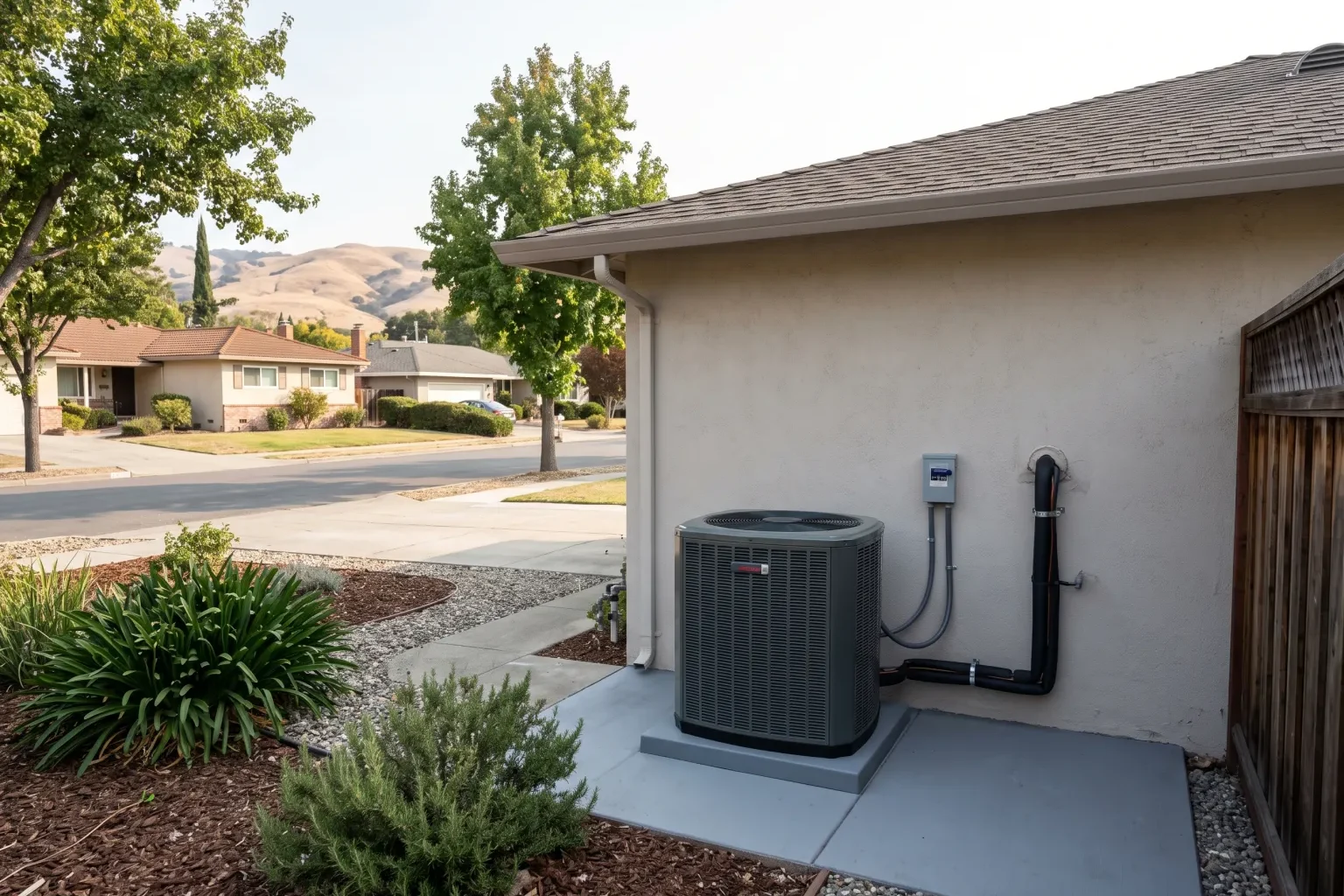
A new air conditioner is a big decision, and in the Santa Clara Valley it's one you'll feel every summer. Heat builds through dry afternoons, and homes in the inland and southern parts of the valley often run noticeably hotter than neighborhoods closer to the Bay. CoolForce AC Repair installs central air conditioners, heat pumps, and ductless systems for homeowners in San Jose and nearby cities. This page explains when installation makes more sense than another repair, what we look at before recommending equipment, what drives the cost, and what to expect from the first visit to the final check.
Signs It's Time for a New Air Conditioner
Most systems don't fail all at once. They decline gradually: run times get longer, some rooms never quite cool, and repairs come closer together. One sign on its own may only mean a repair. Several together usually mean it's time to compare replacement options.
If your home has no AC today, the question is installation, not replacement. We'll check whether your existing ductwork and electrical panel can support a central system, or whether a ductless setup is a better fit.
- The system runs constantly on hot afternoons, but the house stays warm.
- Repairs have become a yearly routine, or a major part like the compressor has failed.
- Summer energy bills keep climbing even though you use the AC the same way.
- Some rooms are much hotter than others, even with the vents open.
- The unit uses an older refrigerant that is getting harder to service.
- You hear grinding, rattling, or loud clicking, or you see ice on the refrigerant lines.
- You're adding cooling to a home that has never had it, or you're finishing an addition.
What We Check Before Recommending a System
We don't size a new system by matching the old one. An oversized unit cools in short bursts, leaves the air clammy, and wears out faster. An undersized one runs all day and still falls behind. Before we recommend anything, we look at the house itself.
We'll also ask how you use your home. We want to know who works from home, which rooms get hot, and whether anyone has allergies. Those answers shape equipment and filter choices as much as the measurements do.
- Square footage, ceiling heights, insulation, and how much sun the windows get
- Ductwork condition, size, and leaks, including sections in the attic or crawlspace
- Electrical panel capacity and the circuit that feeds the outdoor unit
- Where the outdoor unit can go, with room for airflow and service, and attention to noise near bedrooms and neighbors
- Your current furnace or air handler and whether it works with new cooling equipment
- Thermostat type and any rooms you'd like to control separately
Repair or Replace: Your Options
Not every aging system needs to go. Some problems are fixable: a failed capacitor, a worn fan motor, a refrigerant leak we can locate and seal, or a dirty coil. In those cases, a repair can get you through more cooling seasons. We'll tell you when a repair is the reasonable call.
When replacement makes sense, you usually have three paths:
Heat pumps deserve a close look in the Bay Area. Under the Bay Area Air District's rules, gas furnaces manufactured starting in 2029 must meet a zero-NOx emission standard. In practice, that points homeowners toward heat pumps when they replace a furnace after that date. The rules don't require you to replace working equipment, so there's no need to rush. But if your furnace is also near the end of its life, it can make sense to plan heating and cooling together now. Otherwise you might replace the AC today and face a separate furnace decision a few years later.
- Replace the AC only: a new outdoor condenser and a matching indoor coil, keeping your existing furnace.
- Replace the AC and furnace together, so both are matched and installed at the same time.
- Switch to a heat pump, which handles both cooling and heating in one system. It can be ducted or ductless.
What Affects the Cost of AC Installation
We quote after the home visit because the price depends on details we can't judge without seeing the house. These are the main factors:
The federal 25C tax credit for heat pumps applied only to systems placed in service before December 31, 2025. It isn't available for new installations. Bay Area homeowners can still check BayREN and their local clean energy provider for heat pump and electrification incentives. Those programs change with each funding cycle, so we confirm what's currently offered before we include it in a quote.
- System type: central AC, heat pump, or ductless mini-split
- Capacity, sized to your home's actual cooling needs
- Efficiency level and features like variable-speed compressors. These cost more up front but run more quietly and evenly.
- Ductwork repairs, sealing, or new duct runs
- Electrical upgrades, such as a new circuit or panel work
- Whether the furnace or air handler is being replaced too
- Access issues, such as tight attics, long refrigerant line runs, or a new equipment pad
- Permits required by your city
How an Installation Visit Works
Here's how a typical installation goes, from the first assessment to the final check.
After installation, an annual tune-up and regular filter changes help keep the new system running the way it should.
- Home assessment: we take measurements, inspect the ducts and electrical, and talk through your goals.
- Options and quote: you get a plain comparison of the systems that fit your home, with the tradeoffs explained.
- Permits and scheduling: we pull the required permits and set an install date.
- Installation day: we protect your floors, remove the old equipment, set the new indoor and outdoor units, run the refrigerant lines and wiring, and connect the thermostat. Many straightforward replacements take about a day. Jobs with duct or electrical work can take longer.
- Startup and testing: we check refrigerant charge, airflow, temperature drop across the coil, and electrical readings. Then we confirm the system cycles properly.
- Walkthrough: we show you the thermostat, the filter location, and basic upkeep, and we haul away the old equipment.
- Inspection: if your city requires a final inspection, we coordinate it.
AC Installation by city
- AC Installation in Campbell
- AC Installation in Los Gatos
- AC Installation in Monte Sereno
- AC Installation in Saratoga
- AC Installation in Santa Clara
- AC Installation in Cupertino
- AC Installation in Sunnyvale
- AC Installation in Milpitas
- AC Installation in Los Altos
- AC Installation in Mountain View
- AC Installation in Los Altos Hills
- AC Installation in Scotts Valley